
Fairfield Root Zone Calculation for TPZ Fencing Guide
Gold Coast Site Fencing provides expert Root Zone Calculation for TPZ Fencing in Fairfield, CT. Serving neighborhoods like Fairfield Center, Kings Highway West, and Mill Plain, we ensure compliance with local construction and environmental standards, considering Fairfield’s mixed-use developments and climate. Our precise calculations help protect tree health during construction near landmarks like Leo D. Mahoney Arena.
Fairfield's TPZ Compliance Process
When we're installing temporary fencing near protected trees in Fairfield Center, we follow Sacred Heart University's arborist guidelines to the letter. Our crew carries diameter tapes specifically for trunk measurements - I've seen too many guys try eyeballing it and getting fined. For that mixed-use development off Kings Highway West last spring, we used wind-resistant fencing with interlocking panels to stay compliant while handling Nor'easter gusts. The key is maintaining the root zone's integrity while still securing your site.
Calculation Steps
- Measure trunk diameter at 4.5 feet above ground (DBH)
- Calculate TPZ radius as 1 foot per inch of DBH
- Mark protection zone with TPZ rental hardware
- Install fencing at least 3 feet outside TPZ boundary
- Use concrete-free bases to avoid root compaction
Field Protocols for TPZ Perimeter Setup
Field crews in Kings Highway West face strict tree protection ordinances when installing barriers. We measure the distance from the trunk flare to the drip line to establish the tree protection zones. Failure to respect these boundaries near Jennings Beach results in soil compaction. Proper post-driven fence placement ensures the root system remains undisturbed by heavy machinery.
Key Terminology
- Critical Root Zone
- The area around a tree containing roots essential for survival.
- Tree Protection Zone
- Fenced area established to prevent soil compaction and root damage.
- Soil Compaction
- Compression of soil particles reducing pore space and oxygen levels.
- Arborist Report
- Documented assessment used to determine specific fencing setback requirements.
- Root Flare
- The base of the tree where roots begin to spread outward.
- Permeable Surface
- Ground cover allowing water and air to reach the root system.
In Simple Terms
Calculating the root zone determines where to place fencing to prevent tree death during construction.
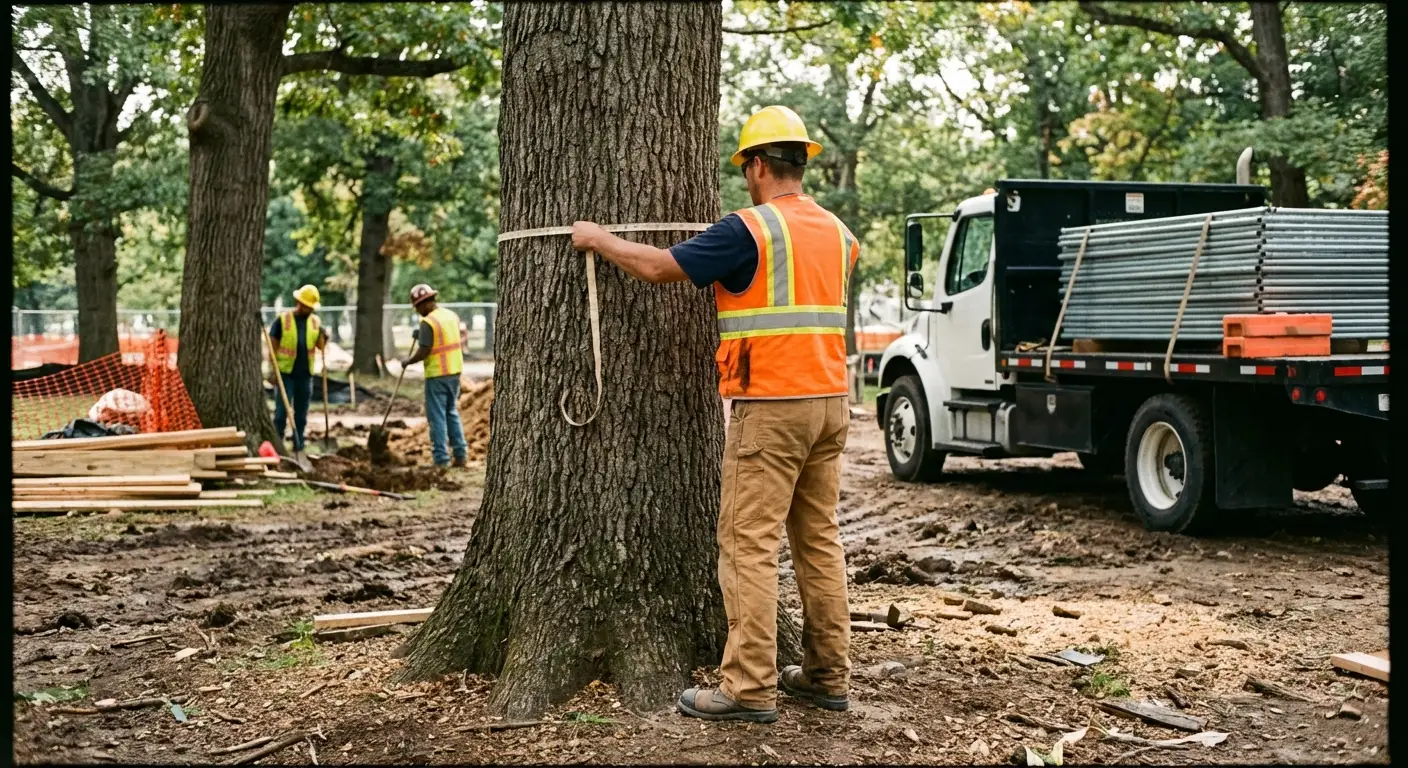
Root Zone Calculation for TPZ Fencing: Compliance Guide
Standards for calculating and installing TPZ fencing around trees ensure compliance with local and federal regulations.
| Root Protection Zone (RPZ) Radius | Calculated as 1 foot per inch of tree DBH (diameter at breast height) |
|---|---|
| Tree Protection Zone (TPZ) Fencing Height | Minimum 4 feet tall to prevent intrusion |
| Fencing Material | Rigid steel or chain-link fencing recommended for durability |
| Fence Placement | Installed at the RPZ boundary, avoiding soil compaction within the zone |
| Signage Requirements | Clear labeling indicating TPZ and restricted access |
| Inspection Frequency | Weekly inspections during construction phases mandated |
| Signage Interval | Every 30 linear feet |
Fairfield Root Zone Protection for Temporary Fencing Installations
Technical compliance ensures minimal environmental impact during site boundary establishment.
Common Mistakes in Root Zone Calculation for TPZ Fencing
We’ve seen the challenges firsthand in Fairfield, especially near Jennings Beach and Old Dam. Root zone miscalculations lead to costly delays and risk tree health, so here’s what to avoid when setting up TPZ fencing.
Underestimating Root Zone Radius
Ignoring the full root zone radius risks damaging critical roots, leading to tree decline or death. This also violates local tree protection ordinances, causing project delays.
Measure root zones based on tree species and size, ensuring fencing extends beyond drip lines to protect vital roots fully.
Ignoring Soil and Site Conditions
Failing to account for soil compaction or nearby construction activity weakens root health and stability, especially near Fairfield Metro-North Station’s high-density developments.
Assess soil type and moisture before fencing placement; adjust root zone protection accordingly to prevent root stress.
Improper Fence Installation in TPZ
Installing fencing too close to the trunk or using heavy equipment inside the TPZ compacts soil and crushes roots, resulting in long-term tree damage and compliance issues.
Set fences at least the radius distance from trunks and avoid heavy machinery within TPZ boundaries to maintain root integrity.
Skipping Regular TPZ Fence Inspections
Neglected fences can shift or get removed during construction near Fairfield Center, exposing roots to damage and violating environmental protections.
Conduct daily or weekly inspections to ensure fencing stays intact and correctly positioned throughout the project.
Not Consulting Local Tree Protection Guidelines
Overlooking Fairfield’s specific TPZ ordinances leads to fines, project shutdowns, and increased costs due to unapproved root zone disturbances.
Review and follow all local regulations before calculating and installing TPZ fencing to stay compliant.
Root Zone Calculation for TPZ Fencing: Precision That Protects Trees and Projects
We treat every tree protection zone like the living infrastructure it is—because in Fairfield, a damaged root system can halt a project for months. Our crew doesn’t just install fencing; we read the ground, respect the biology, and build barriers that comply without compromise. That’s how we keep your timeline intact and your site audit-ready.
-
Accurate Root Zone Mapping
We begin every TPZ fencing layout by physically staking and measuring the protected root zone based on arborist reports or municipal tree ordinances. This ensures posts never penetrate critical root areas, preserving tree health while meeting Fairfield’s compliance standards.In PracticeOn a mixed-use build near Fairfield Center, we adjusted panel placement 18 inches outward to avoid the drip line of a heritage oak.
-
Non-Invasive Base Selection
We select concrete or steel bases from our concrete-steel-bases lineup based on soil compaction and root sensitivity. Steel bases minimize ground disturbance where root zones are shallow or densely packed.In PracticeIn Mill Plain, we used weighted steel bases instead of driven posts to protect surface roots near a sidewalk retrofit.
-
Dynamic Layout Flexibility
Our modular panels with interlocking-hooks and modular-reconfiguration let us curve fencing around irregular root zones without cutting or splicing, maintaining structural integrity and compliance.In PracticeNear Kings Highway West, we wrapped a TPZ fence around three mature maples using 6-inch panel offsets—no digging required.
-
Storm-Ready Stability
Fairfield’s coastal winds demand TPZ fences that won’t topple into root zones. We reinforce with wind-load-resistance bracing and zero-trip-hazard bases so fences stay upright without anchors that damage roots.In PracticeAfter the Jennings Beach winter blowout, our crew used wheel-assisted gates and wind-rated panels to secure a TPZ without a single post-driven intrusion.
Gold Coast Site Fencing follows Connecticut DEEP guidelines and Fairfield municipal tree ordinances to ensure every TPZ fence we install protects root zones without sacrificing speed, safety, or structural reliability.
Root Zone Calculation for TPZ Fencing in Fairfield, CT
Fairfield TPZ fencing follows root zone measurements, site access limits, and local tree protection rules in Old Dam and Fairfield Center.
How is the root zone measured for TPZ fencing in Fairfield Center?
Measure the root zone from the tree trunk at grade, then mark the protection radius before fencing. In Fairfield Center, crews use the plan’s trunk diameter and confirm offsets against sidewalk edges, utility cuts, and existing post-2000 mixed-use frontage so the TPZ stays clear of foot traffic.
Why does Old Dam need extra care near salt marsh ground?
Old Dam sits near the Pine Creek salt marsh, where soft soils and tide exposure change root spread and access. TPZ fencing there follows the root flare, avoids wet compaction, and keeps fence lines out of drainage swales that feed marsh-adjacent trees.
What happens when a tree sits close to Kings Highway West construction access?
Kings Highway West has tighter site access and heavier curb activity, so TPZ layout has to fit around staging lanes and material drops. The fence line stays outside the root zone, with gates placed where truck tires and pallet handling will not cross exposed roots.
How is root zone protection handled near Leo D. Mahoney Arena events?
Near Leo D. Mahoney Arena, event traffic brings loading pressure, temporary fencing, and pedestrian redirects. TPZ fencing there needs clear visibility, stable anchoring, and a buffer from walk paths so crowd control does not push foot traffic into compacted root soil.
Do post-2000 mixed-use buildings change TPZ fence layout?
Post-2000 mixed-use buildings in Fairfield Center often have tight setbacks, retail entries, and utility vaults near street trees. That layout forces careful TPZ measurement so the fence avoids storefront access, trench zones, and basement ventilation while keeping the root area intact.
What code checks matter for TPZ fencing in Fairfield, CT?
Fairfield, CT crews check local tree protection rules, OSHA site safety practices, and any park or streetscape limits tied to the work area. The fence plan has to match the survey, leave inspection room, and keep roots protected during grading or demolition.
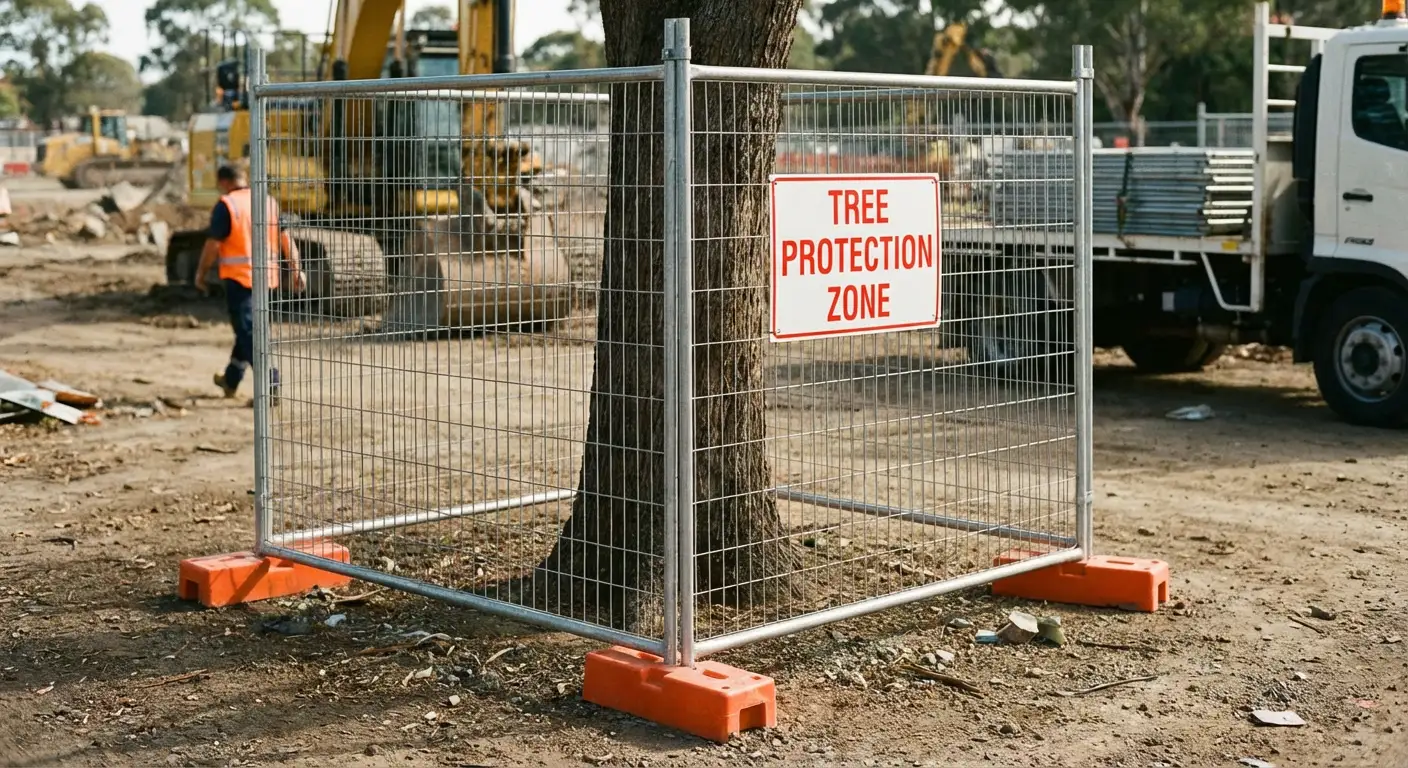
TPZ Fencing Root Zone Compliance in Fairfield
Request technical calculations to ensure fencing installations protect critical root zones and meet local Fairfield municipal vegetation preservation standards.
Serving construction sites throughout Fairfield County, Connecticut